The Golden Soul of Tuscany’s Sunflowers
Posted on
They are the unofficial emblem of a Tuscan summer—a sea of golden yellow, stretching toward a blue sky, framed by a lone cypress tree. The sunflower fields of Tuscany are a photographer’s dream, but to see them as mere décor is to miss their deeper story. They are a living, breathing heartbeat of the landscape, a symbol of radiant joy, and a fleeting seasonal spectacle. Here’s how to truly experience i girasoli.
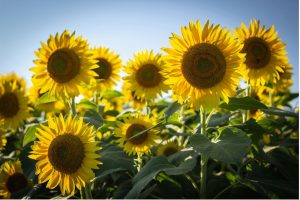
Photo: Bonnie Kittle on Unsplash
A Practical & Poetic Crop
First, a reality check: these are not planted for their beauty. They are a vital agricultural crop, grown for their oil and seeds. Their poetic name in Italian, girasole (“turn toward the sun”), describes their heliotropism—young flower heads tracking the sun from east to west each day. As they mature and heavy with seeds, they stop moving, most famously bowing eastward at dawn. This beautiful dance with the sun is the very soul of the countryside’s summer rhythm.
Stay at: Villa Vallebuia
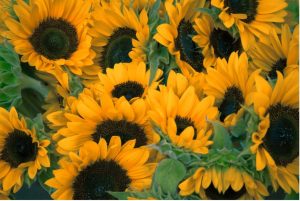
Photo: Gérôme Bruneau on Unsplash
Chasing the Golden Window
Peak Bloom: Typically from late June through mid-July. This is the “golden hour” that lasts for weeks—vibrant, tall, and uniform.
The Shift: By late July the harvest begins. You’ll start to see fields with bowed, brownening heads, with a Van Gogh-esque beauty.
Stay at: Villa Castello di Cabbiavoli
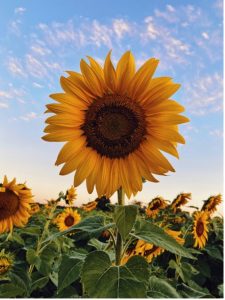
Photo: Aaron Burden on Unsplash
Finding Your Perfect Field
While you can stumble upon them almost anywhere in the rural regions, some areas are iconic:
The Val d’Orcia: This UNESCO-listed landscape south of Siena provides the quintessential postcard scene. The rolling hills near San Quirico d’Orcia, Pienza, and Montalcino offer dramatic backdrops of cypress alleys and hilltop towns.
The Chianti Region: Along the scenic roads (SR222 especially) between Florence and Siena, sunflowers often complement the vineyards, creating a stunning patchwork of green and gold.
The Crete Senesi: The iconic, bare clay hills near Asciano create a beautiful, stark contrast with the vibrant yellow flowers.
Stay at: Le Querce
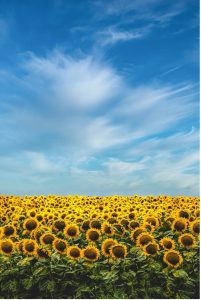
Photo: Todd Trapani on Unsplash
Beyond the Snapshot
Visit at the Right Time of Day: Go at sunrise or late afternoon. The light is magical, the temperatures are kinder, and the shadows create depth. Midday sun can bleach the colour.
Listen: Stand quietly at the field’s edge. The sound is a constant, low hum of bees -the essential pollinators at work.
Follow the Cycle: If you visit in late summer, don’t be disappointed by harvested fields. Instead, seek out a local frantoio (oil mill) or market to taste the final product: rich, golden sunflower oil on a piece of fresh bread.
Stay at: Borgo San Pollino

Photo: Michelle Francisca Lee on Unsplash
From Van Gogh to La Dolce Vita
Sunflowers embody the Tuscan philosophy of la dolce vita –the sweet life. They represent warmth, resilience, and an unapologetic embrace of beauty and joy. They have inspired artists for centuries, most famously Vincent van Gogh, who found in them a symbol of light and gratitude. In Tuscany, they are a living art installation, a reminder to turn your face toward the simple, bright wonders of the world.
Stay at: Casa all’Erta
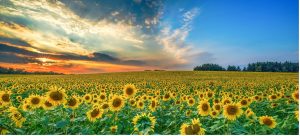
Photo: Bonnie Kittle on Unsplash