Glorious Chianti Wine
Posted on
For many, the word “Chianti” conjures an image: that iconic, straw-wrapped bottle flickering in the candlelight of a red-checked tablecloth trattoria. But to stop there is to miss the soul of one of Italy’s most profound and historic wines. Today’s Chianti has evolved, shedding its rustic stereotype to reveal a wine of remarkable elegance and diversity.
A Landscape in a Glass: The Heart of Tuscany
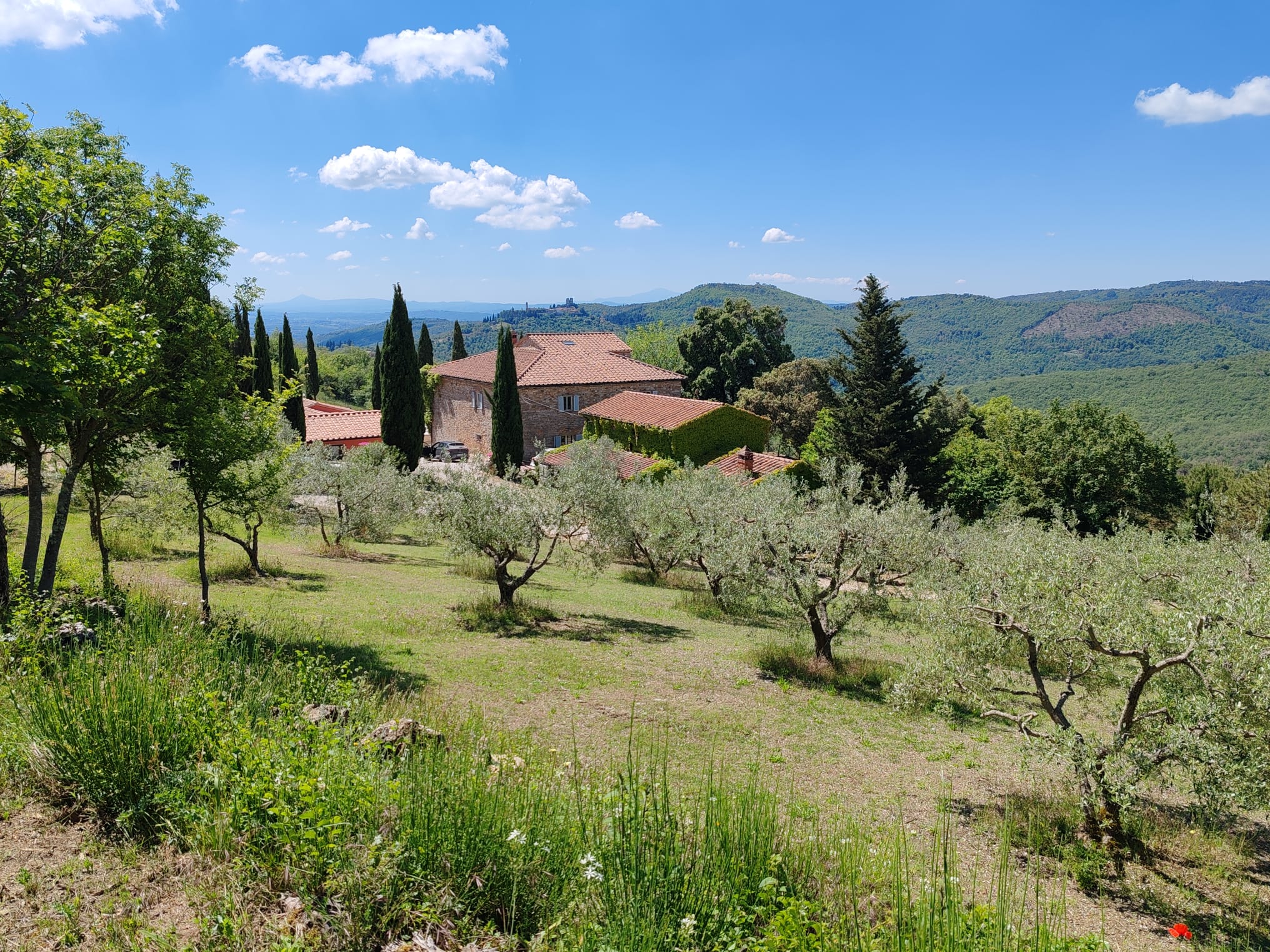
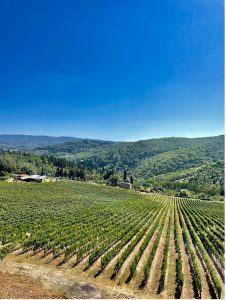
Chianti isn’t just a wine; it’s a region, a culture and a way of life. Nestled between Florence and Siena, its landscape is the stuff of Renaissance paintings: rolling hills crested with cypress trees, ancient stone farmhouses and silver-green olive groves weaving between vineyards. This breath-taking scenery is the cradle of the Sangiovese grape – the undisputed king of Chianti.
Sangiovese, whose name derives from Sanguis Jovis (“the blood of Jove”), gives Chianti its vital character: high acidity, firm tannins, and aromas of tart cherry, sun-warmed earth, dried herbs, and a whiff of leather. It’s a grape that speaks directly of its home.
Stay at: Podere Talante dei Bagni
The Rules of the Game: Chianti vs. Chianti Classico
Understanding labels is key to unlocking Chianti’s diversity:
- Chianti: The broadest category, produced across a large area of Tuscany. It’s often approachable, fruit-forward, and a fantastic everyday pizza-and-pasta wine.
- Chianti Classico: This is the historic heartland, the original zone defined in 1716. Wines from here bear the famous Gallo Nero (Black Rooster) seal on the neck. They are typically more structured, complex, and age-worthy.
- Chianti Classico Riserva: Made from the best grapes and aged for at least 24 months. These are serious, cellar-worthy wines that express their specific village (Radda, Gaiole, Castellina, etc.) with stunning clarity.
- Chianti Superiore: A step above basic Chianti, with stricter yield rules and a minimum aging period.
Stay at: Villa Conti Galgani
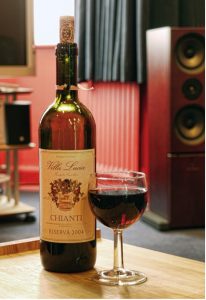
Photo: Brett Jordan on Unsplash
What Does Chianti Taste Like?
Forget the thin, sharp wines of the past. A modern, quality Chianti offers:
- Sight: A translucent ruby red colour that turns to garnet with age.
- Smell: A vibrant bouquet of red cherries, wild berries, violets, rosemary, and tobacco. With age, notes of balsamic, leather, and forest floor emerge.
- Taste: That signature crisp acidity makes your mouth water, balanced by silky or chalky tannins. It’s medium-bodied, with a savoury, food-loving finish that begs for another bite – and another sip.
Stay at: Villa Nobile di Castelmuzio
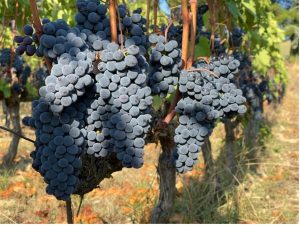
Photo: John Cameron on Unsplash
Chianti & Food
Chianti’s high acidity and savoury profile make it arguably the world’s most food-friendly red. It’s a match made in heaven for Tuscan cuisine:
- The Classic Pairing: Bistecca alla Fiorentina (a massive T-bone steak). The wine’s acidity cuts through the charred fat beautifully.
- Pasta Perfection: With pappardelle al ragù di cinghiale (wild boar pasta) or a simple tomato-and-basil pasta.
- Cheese Please: Aged Pecorino Toscano or Parmigiano-Reggiano.
- Everyday Magic: Pizza Margherita, mushroom risotto, or herb-roasted chicken.
Stay at: Villa Reggello
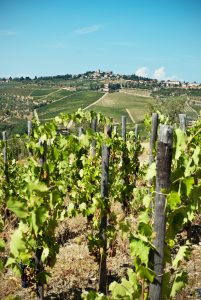
Photo: Sven Johanson on Unsplash
How to Choose a Great Bottle
- Look for the Gallo Nero: For a guaranteed quality experience, start with a Chianti Classico.
- Venture to a Village: Seek out wines from specific communes like Radda (elegant, finesse), Castellina (robust, structured), or Gaiole (aromatic, balanced).
- Consider the Producer: Names like Fontodi, Castello di Ama, Isole e Olena, and Fèlsina are benchmarks of quality.
- Vintage Matters: Recent excellent vintages include 2015, 2016, 2019, and 2020. These are years to splurge on a Riserva.
- Serve it Right: Serve slightly below room temperature (around 60-65°F / 16-18°C). Decanting a Riserva for an hour unlocks its full symphony of flavours.
Stay at: Villa Sambuco
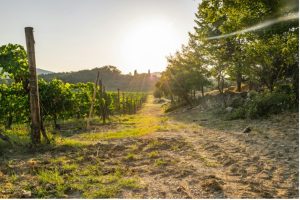
Photo: Dominik Dancs on Unsplash
A Living Legacy
Chianti’s story is one of resilience and renewal. From its Etruscan roots to its 19th-century “formula,” and through a late-20th-century quality revolution, it has emerged stronger and more compelling than ever. It’s a wine that captures the very essence of Tuscany: rustic yet refined, powerfully evocative, and endlessly welcoming.
So, the next time you see a bottle, look past the straw basket (which is now a rarity, reserved mostly for decor). Instead, look for the Gallo Nero. Open the bottle, pour a glass, and let the flavours transport you to those sunlit Tuscan hills.
Salute!
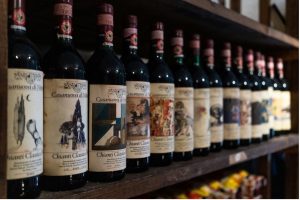
Photo: Aleksandrs Karevs on Unsplash